

Seasonal coffee
Roasted in Edinburgh
New coffee
Shyira - Rwanda
Clean & vibrant with stone fruit
sweetness and sparkling citrus
acidity
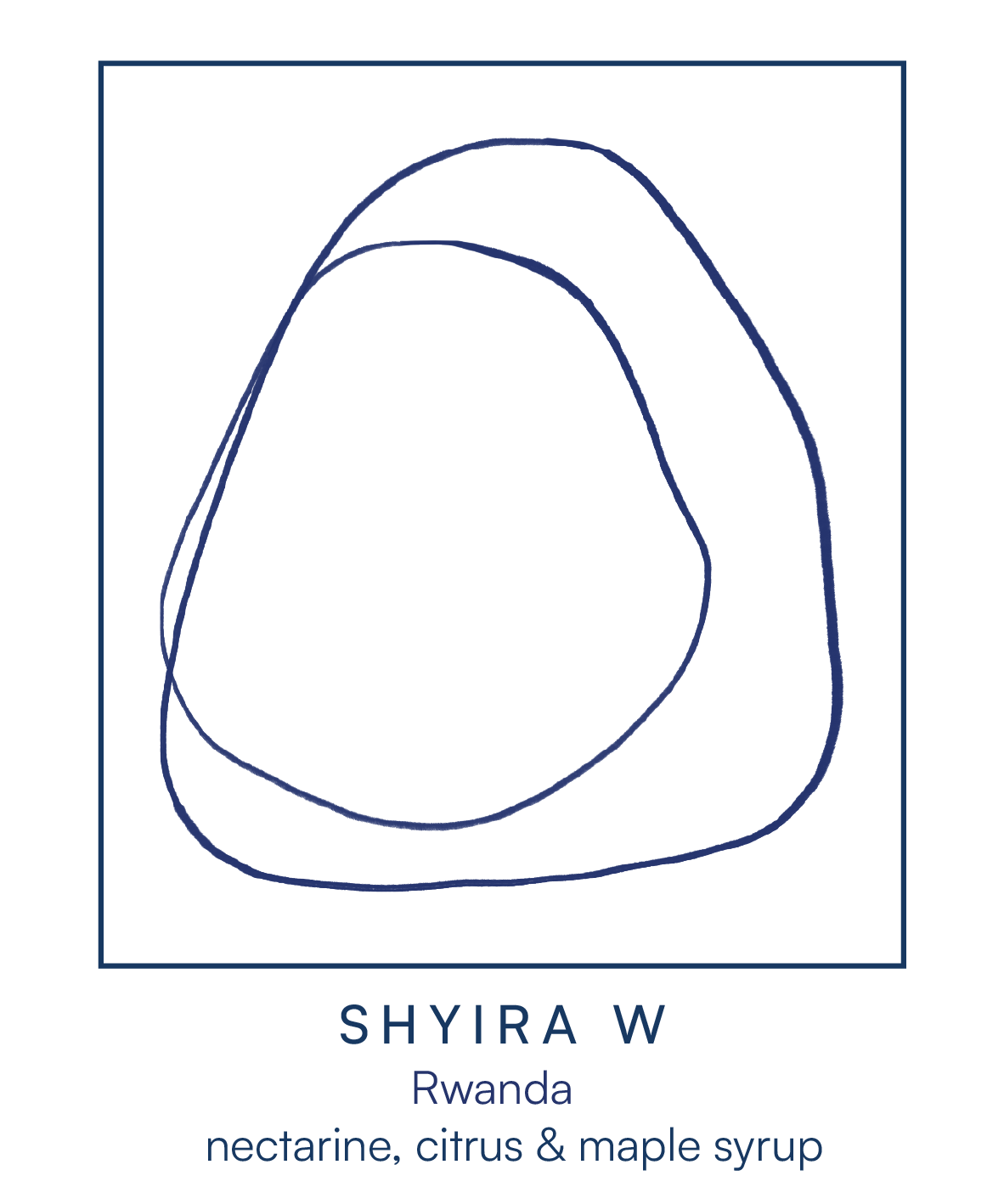
Nectarine, Citrus & Maple Syrup
Origin: Nyabihu, Rwanda | Producer: The Shyira Washing Station | Variety: Red Bourbon | Process: Washed | Altitude: 1800 - 2000 MASL | Harvest: 2025
Few coffees represent our roastery better than the beautiful coffees of Shyira. This is the 7th year we have purchased coffee from this washing station and it is something we look forward to every year. Our fantastic import partners, Raw Material, alongside the locally based Muharo Trading Company, have done amazing work on the ground in Shyira to improve quality and infrastructure. The coffees produced by this partnership are nothing short of incredible and, in our opinion, some of the best coffee being produced in the world today.
The station itself was built in 2017 in the Nyabihu region of Rwanda. Situated 2000 metres above sea level it collects coffee cherry from local producers that live as high as 2400 masl - some of the highest grown coffee in Rwanda. This, combined with the plentiful access to water thanks to the river that runs through the base of the station, lead to unrivalled cup quality in the area. The coffees are clean and refined with a cup profile that is both complex and also familiar.
This is the washed lot produced by the station this harvest. It’s clean, vibrant with the sweetness of stone fruits and sparkling citrus acidity. A beautiful representation of the coffee produced in this region.
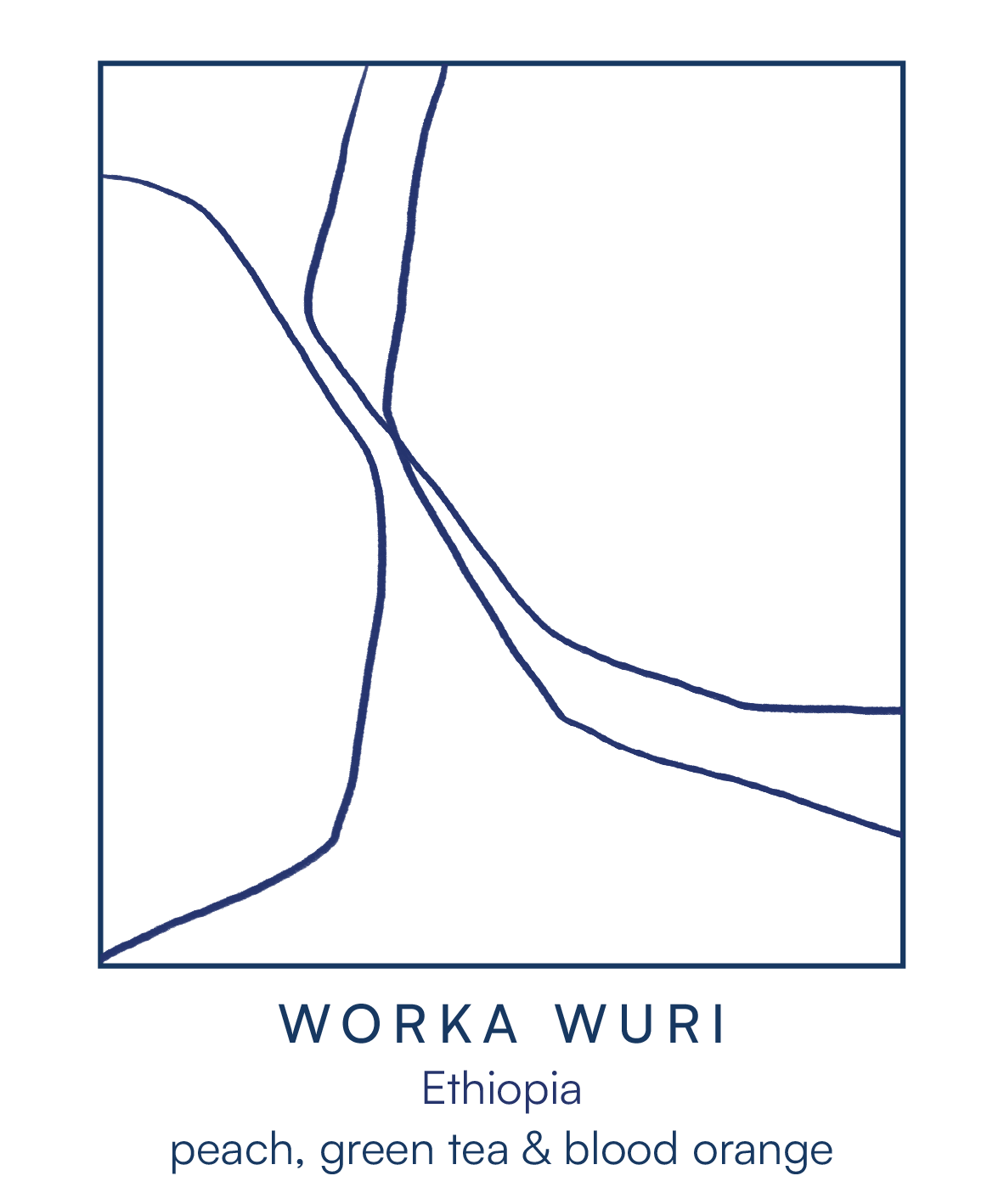
Peach, Green Tea & Blood Orange
Origin: Gedeb, Ethiopia | Producer: Worka Wuri Washing Station| Variety: Heirloom | Process: Washed | Altitude: 1900 MASL | Harvest: 2025
Worka Wuri is a classic washed Ethiopian. Sweet, tea like, peachy, delicate and floral. There’s always something quietly magical about washed coffees from Ethiopia. For many people, a washed Ethiopian is their gateway into speciality coffee. Even now, the profile remains unmistakable.
I love thinking about the history here too. Coffee was first discovered in Ethiopia some 800 to 900 years ago, and much of the country’s production still comes from wild or semi wild trees. It makes you wonder whether what we’re tasting today bears any resemblance to what Kaldi the goat herder stumbled upon all those centuries ago.
Built in 2012, Wuri is located in the Gedeb region of Ethiopia, just south of Yirgacheffe. It emerged during a time when southern Ethiopian growers and entrepreneurs were beginning to move beyond the traditional cooperative model, seeking greater control over quality and traceability. Wuri represents the focused, quality driven direction Ethiopian coffee has become known for.
In the cup, we find juicy peach melba, a fragrant green tea character and a delicate floral sweetness carrying through the finish.
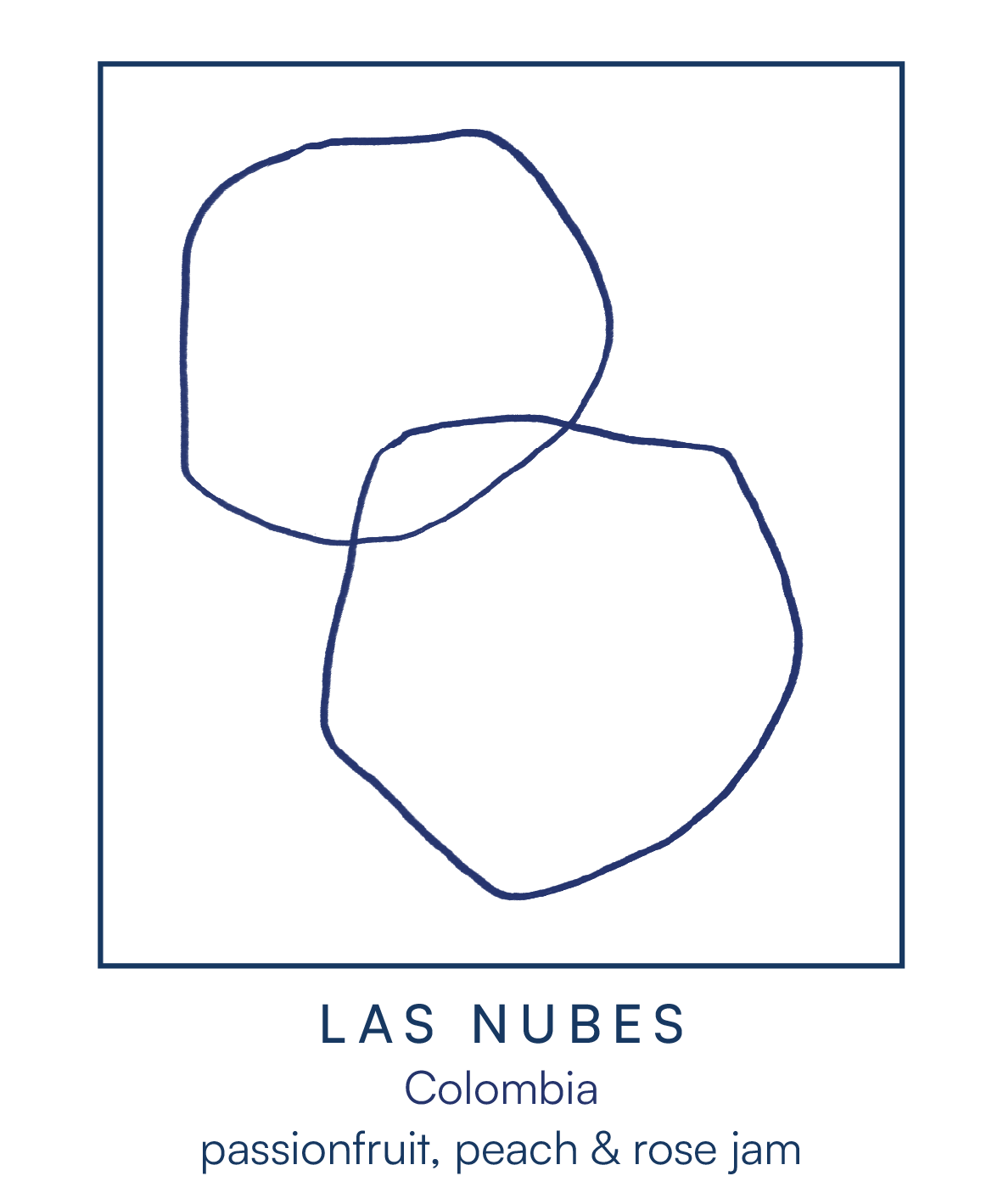
Passion Fruit, Peach & Rose Jam
Origin: Huila, Colombia | Producer: Claudia Samboni | Variety: Pink Bourbon | Process: Washed | Altitude: 1700 MASL | Harvest: 2025
When Claudia Samboni acquired Finca Las Nubes in 2020, her ambition was clear: to leave a lasting legacy within the coffee industry. This washed Pink Bourbon may well be the realisation of that vision. Situated near the small township of Aguas Negras, just outside the municipal capital of Pitalito, Las Nubes occupies a prime position for producing outstanding coffees — with breathtaking views to match.
Pink Bourbon is one of our favourite varieties here at the roastery. When it’s done right, the results are extraordinary, delivering vivid tropical fruit and floral complexity. Only recently rediscovered after growing wild for decades, the variety traces its origins back to Ethiopia. It’s believed to have arrived in South America during the 1960s, when governments, keen to expand coffee production, imported exotic Ethiopian varieties that were planted and later largely forgotten.
For this lot, Claudia employed a meticulous washed process with extended, controlled fermentation. Whole cherries are sealed in tanks for a 60-hour cherry fermentation before being pulped and returned to dry tanks for a further 140 hours. The coffee is then thoroughly washed to remove excess mucilage and dried slowly on raised African beds for 20–25 days, depending on the weather.
This is one of the most exceptional coffees we’ve encountered all year. In the cup, vibrant notes of passion fruit and peach are beautifully balanced by a rose-jam sweetness, creating a cup that is both expressive and elegant.
Apricot, Wine Gums & Fruit Syrup
Origin: Guji, Ethiopia | Producer: Kercha Station | Variety: Heirloom | Process: Anoxic Natural | Altitude: 2000 MASL | Harvest: 2025
Ethiopia — the birthplace of coffee. It’s one of our favourite origins and one that continues to produce some of the most remarkable coffees in the world.
This lot comes from the Kercha processing station in Ethiopia’s Guji region. Guji, named after a tribe of the Oromo people, lies in the country’s south and is known for its rich, fruit-forward coffees. The lot we selected underwent an extended anoxic fermentation: ripe cherries are placed in stainless steel tanks filled with water and sealed to create an oxygen-free environment. The temperature inside the tanks is carefully monitored throughout, and after 4–5 days the cherries are removed and laid out to dry on raised beds for up to 18 days. The station refers to this method as the “Wine Process,” a technique they adopted from the winemaking world.
The result is an exceptional coffee that immediately put a smile on our faces when we first cupped it. Expect a lively stone-fruit brightness reminiscent of apricot, a deep, rich note that brings to mind purple wine gums, and a syrupy, satisfying sweetness. It’s a cup designed to bring a little light to the darkest winter mornings.

Cherry, Raspberry & Milk Chocolate
Origin: Nyamasheke, Rwanda | Producer: Rugali, Kilimbi & Gisheke Washing Stations | Variety: Red Bourbon | Process: Natural | Altitude: 1600 - 1650 MASL | Harvest: 2025
Returning to our roastery for a third year, “Gito” is a coffee we’re proud to continue championing—not only because it’s a delicious example of what Rwandan coffee has to offer, but also because of the positive impact it makes throughout the supply chain.
“Gito” means tiny in Kinyarwanda, referring to the size of the beans. In Rwanda—as in many other African coffee-producing countries—bean size traditionally determines both quality and price. Smaller beans, graded to a screen size of 13–14, are often considered less desirable and typically sold to the commodity market at lower prices. Yet these beans can be incredibly flavourful and hold significant value in the specialty market.
Through an innovative approach, Raw Material, in partnership with Muraho Trading Company, has been collecting these smaller lots from selected washing stations and processing them with the same care and attention as any specialty-grade coffee. The result: producers are able to earn more from a greater share of their harvest, increasing both their income and the sustainability of their work.
Specialty coffee is facing headwinds—particularly in Rwanda—but rethinking traditional quality markers and reimagining the value chain are small but meaningful steps toward a more equitable and resilient coffee industry.
When I first tasted this year’s Gito, I was struck by its clean, raspberry-like acidity—it practically sparkles on the tongue. Its texture is smooth like milk chocolate, with a lingering sweet cherry finish.
Almond, Lemon & Golden Syrup
Origin: Huila and Tolima, Colombia | Producer: A mix of producers from the region | Variety: Castillo, Caturra & Colombia | Process: Washed Sugarcane Decaffeination | Altitude: 1400 - 2000 MASL | Harvest: 2024
Sugarcane decaffeination—often referred to as a natural process decaf—relies on ethyl acetate, a naturally occurring compound commonly found in fermented fruits such as ripe bananas and even in beer. This particular lot comes from the Huila and Tolima regions of Colombia and is decaffeinated locally using a process that combines pure water from the Nevado del Ruiz volcano and ethyl acetate derived from fermented sugarcane grown in Palmira, in southern Colombia.
The process begins by steaming the green coffee, which opens the pores of the beans and initiates the breakdown of caffeine molecules—typically bonded to salts and chlorogenic acids. The beans are then gently soaked in an ethyl acetate solution, which removes up to 97% of the caffeine. A final round of steaming ensures that any remaining trace of the compound is lifted, leaving behind a minimal residue of just ≥30 ppm—significantly less than what’s found in a banana.
What truly stood out to us in this decaf is its remarkable sweetness and the clean citrus finish. It’s easily one of the best decaffeinated coffees we’ve ever tasted.
Plum, Red Grape & Orange
Origin: Oaxaca, Mexico | Producer: The Producers of Mazateca | Variety: Caturra & Castillo | Process: Washed | Altitude: 1450 - 1900 MASL | Harvest: 2025
Sierra Mazateca has become an ever present in our seasonal line up with this being the third year we have bought coffee from the region. We keep coming back for the depth and complexity in the cup, and we’re genuinely excited to share this year’s “Lotecitos” with you.
Sierra Mazateca is named after the Mazatec people, a Nahuatl term meaning “deer people.” In their own language, they call themselves Ha Shuta Enima or “those who work the hills,” which makes perfect sense for a region perched high in the mountains at the northern edge of Oaxaca, surrounded by mist, rain, and dense forest.
It’s a deeply indigenous area where most people speak Mazateco and maintain strong cultural traditions. Communities are small and often remote, with limited access to health and education. Most families farm just a few hectares, and coffee plays a vital role in their livelihoods. The steep terrain makes the work demanding, but it’s also what gives the coffee its striking quality.
Many of the best lots are tiny, sometimes as little as 5kg, too small to stand alone commercially. Our import partners, Raw Material, gather these small lots into a blend they call “Lotecitos,” or “Little Lots,” ensuring producers are paid fairly while preserving the character of each harvest.
In the cup, expect plum, bright citrus, gentle spice, and a rich texture. It’s a layered, rewarding brew that captures something honest and vibrant about this remarkable region.
Strawberry, Guava & Parma violet
Origin: Yirgacheffe, Ethiopia | Producer: The Idido Processing Station | Variety: Heirloom | Process: Anoxic Natural | Altitude: 2000 MASL | Harvest: 2025
Ethiopia — the birthplace of coffee. It remains one of our favourite origins and a constant source of remarkable, expressive coffees. We’re also excited to showcase another naturally processed lot that delivers vibrancy and complexity in equal measure.
This lot comes from the Idido processing station in the Yirgacheffe region. Yirgacheffe is world-renowned for producing some of the most floral and fruit-forward coffees anywhere. Many people have taken their first step into speciality coffee through a Yirgacheffe cup. Its high elevations (reaching up to 2,200m in some areas), fertile soils, consistent rainfall, and deep local expertise all contribute to its exceptional reputation.
Our lot has been processed using an extended anoxic fermentation with the addition of commercial yeast cultures. These yeasts help enhance and improve the efficiency of the fermentation process, amplifying the natural flavours of the wild Ethiopian heirloom varieties. After around two days of fermentation, the cherries are laid on raised beds to dry slowly in the sun for up to 21 days.
This coffee offers layers of flavour that unfold beautifully in the cup. The fruit character leans towards the tropical — think ripe guava — paired with the sweetness of macerated strawberries. It’s rounded out by a delicate floral note that reminds us of parma violets. Distinct, refined, and completely delicious.
Guava, Papaya & Orange Blossom
Origin: Huila, Colombia | Producer: Sergio Aranda Gomez | Variety: Ombligon | Process: Washed Mosto Fermentation | Altitude: 1600 MASL | Harvest: 2025
We’re incredibly excited to share this unique coffee and introduce a brand-new variety to our lineup for the very first time: Ombligon.
Ombligon translates to “belly button,” a name inspired by the cherry’s distinctive, unusual shape. It belongs to a fascinating group of recently rediscovered varieties emerging across South America in recent years, alongside names like Pink Bourbon and Sidra. Much like these varieties, Ombligon’s exact origins remain somewhat mysterious. It’s widely believed to have been imported from Ethiopia many years ago, undergoing a natural mutation along the way. Recently, Ombligon has been making waves on the competition circuit—and it’s easy to see why, thanks to its intensely fruit-forward profile and beautifully clean acidity.
This particular lot was produced by Sergio Aranda Gomez on his farm, Finca Anaya. Sergio and his family have owned the farm for over thirty years, with a deep commitment to embracing biodiversity throughout both their agricultural and fermentation practices.
For this lot, Sergio begins by fermenting the cherries in water before depulping. The beans then move into a second fermentation stage where, instead of water, mosto is used. Mosto is the liquid leftover from a previous fermentation, and when reused, it acts as a natural culture starter for the next batch. This secondary fermentation lasts around two to three days, followed by approximately twelve days of sun drying.
The results are stunning. The first thing you’ll notice is an expressive aroma that fills the room with notes of dried berries and vanilla and citrus. On the palate, the coffee is bright and rich, bursting with tropical fruit, a floral sweetness and supported by a creamy texture that makes for a truly unforgettable drinking experience.
Blackberries, Red Apple & Vanilla
Origin: Nyabihu, Rwanda | Producer: The Shyira Washing Station | Variety: Red Bourbon | Process: Washed | Altitude: 1800 - 2000 MASL | Harvest: 2025
Few coffees represent our roastery better than the beautiful coffees of Shyira. This is the 7th year we have purchased coffee from this washing station and it is something we look forward to every year. Our fantastic import partners, Raw Material, alongside the locally based Muharo Trading Company, have done amazing work on the ground in Shyira to improve quality and infrastructure. The coffees produced by this partnership are nothing short of incredible and, in our opinion, some of the best coffee being produced in the world today.
The station itself was built in 2017 in the Nyabihu region of Rwanda. Situated 2000 metres above sea level it collects coffee cherry from local producers that live as high as 2400 masl - some of the highest grown coffee in Rwanda. This, combined with the plentiful access to water thanks to the river that runs through the base of the station, lead to unrivalled cup quality in the area. The coffees are clean and refined with a cup profile that is both complex and also familiar.
This is the natural lot produced by the station this harvest. It’s juicy and vibrant with a blackberry sweetness and bright, red apple acidity which bring real depth of flavour. This is a beautiful representation of the coffee produced in this region.
COFFEE SUBSCRIPTIONS
Enjoy Fortitude coffee at home

ABOUT
Find out more about Fortitude

VISIT
Discover our Edinburgh locations